unthinkable happens,
no one
should face it
alone.
LOSS Teams South Carolina brings trained volunteers (including fellow survivors of suicide loss) directly to families in their darkest hours. We show up so they don't have to face the first moments by themselves.


WHAT IS A LOSS TEAM?
LOSS stands for
Local Outreach to Suicide Survivors
When a suicide occurs, a LOSS Team is activated — typically through coordination with the coroner, medical examiner, or law enforcement. Trained volunteers respond directly to the scene or family to offer immediate, compassionate support.
At least one LOSS Team volunteer is themselves a survivor of suicide loss. That's not an accident — it's the heart of our model. When a newly bereaved family member looks across the room and sees someone who has lived through this and is still standing, still serving, still hopeful — something shifts. Seeds of hope are planted in the hardest soil imaginable.
We don't offer platitudes. We don't have all the answers.
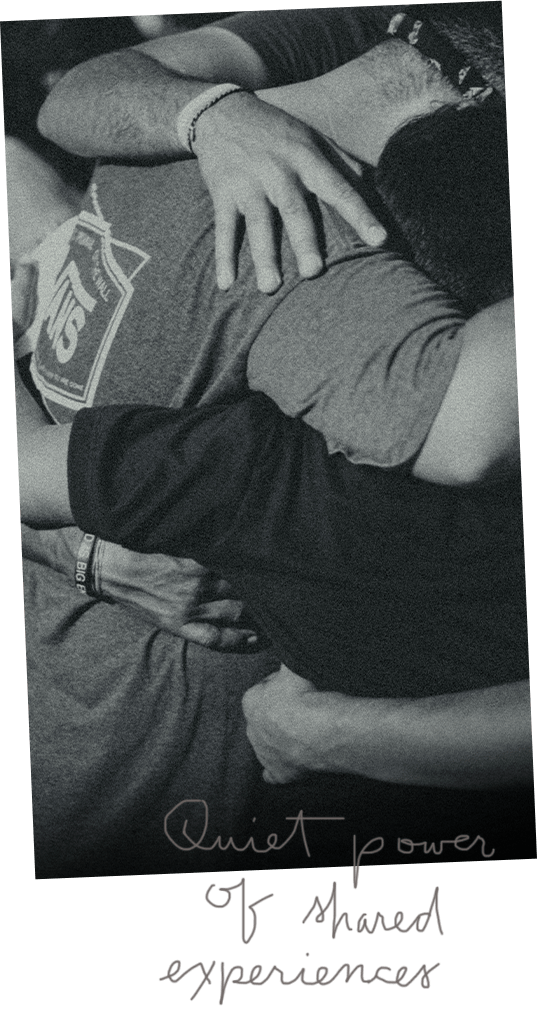
We bring presence, resources, and the quiet power of shared experience.
So what happens when a LOSS Team is called?

We Are Activated
We Show Up
We Connect

POSTVENTION IS PREVENTION
Every suicide leaves behind an estimated 135 people who are profoundly affected — family members, friends, coworkers, classmates.
Research tells us that people bereaved by suicide loss are themselves at significantly elevated risk for suicide. That means if we don't reach those 135 people with immediate support and connection, we may be leaving future lives in the balance.
Postvention — caring for those left behind after a suicide — is one of the most powerful prevention strategies we have. When a LOSS Team shows up, we aren't just helping someone survive their grief. We are actively reducing the risk that their grief becomes the next tragedy.
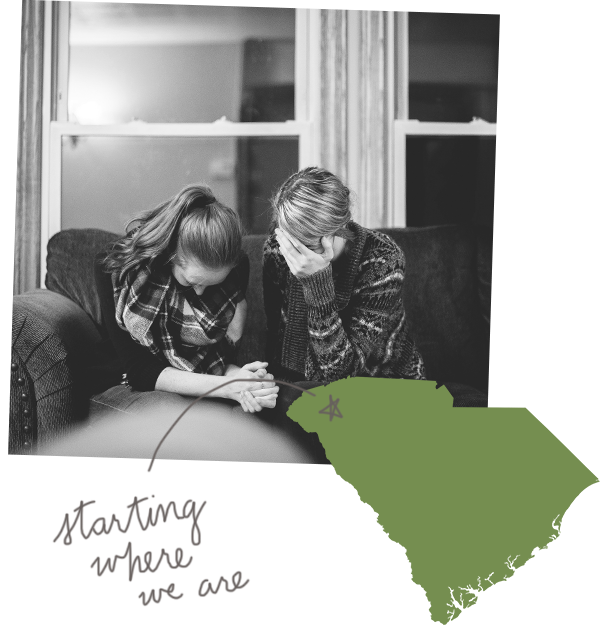
STARTING WHERE WE ARE
Pickens County, South Carolina
We are building the first county-based LOSS Team response infrastructure in South Carolina, beginning in Pickens County and expanding into Greenville County. We are working alongside county coroners, law enforcement, funeral homes, and community partners to make sure that when tragedy strikes, a trained, compassionate team is ready to respond.
South Carolina loses hundreds of lives to suicide each year, and thousands more carry the weight of that loss without adequate support.
We are changing that, county by county, family by family.
LOSS Teams SC is a program of the Half a Sorrow Foundation, a South Carolina-based nonprofit dedicated to improving mental health through real conversations. Our founder, Dennis Gillan, lost two brothers to suicide. Our volunteers have walked through their own darkest valleys and come out the other side committed to making sure others don't walk alone.
We are not clinicians at your door. We are neighbors. We are survivors. We are proof that there is life after loss.
VOLUNTEER TODAY
Could you be the
hope someone
needs?
If you have lost someone to suicide and feel ready to walk alongside others in their earliest moments of grief, we want to talk with you. You will be part of a trained team, supported by clinical partners and experienced coordinators.
PARTNER WITH US
We can’t make this
work without
partners.
We are actively seeking partnerships with county coroners, medical examiners, law enforcement agencies, funeral homes and directors, hospitals and behavioral health providers, faith communities, and corporate sponsors. Consider supporting us today.